The main intrigue of September elections — will Communists regain their positions?
08.08.2024





Alexander Kynev is an independent Russian analyst who writes about regional politics and electoral processes at the regional and local levels.
This article is a translation of the interview with Alexander Kynev published by 7x7 media. To access the original text, follow the link.
On 6-8 September, regional elections will be held in Russia. In 21 regions, new regional heads will be elected - some governors became ministers and left their posts. In two more cities - Abakan and Anadyr - residents will elect new mayors. In addition, elections will be held at the level of regional parliaments and municipal councils.
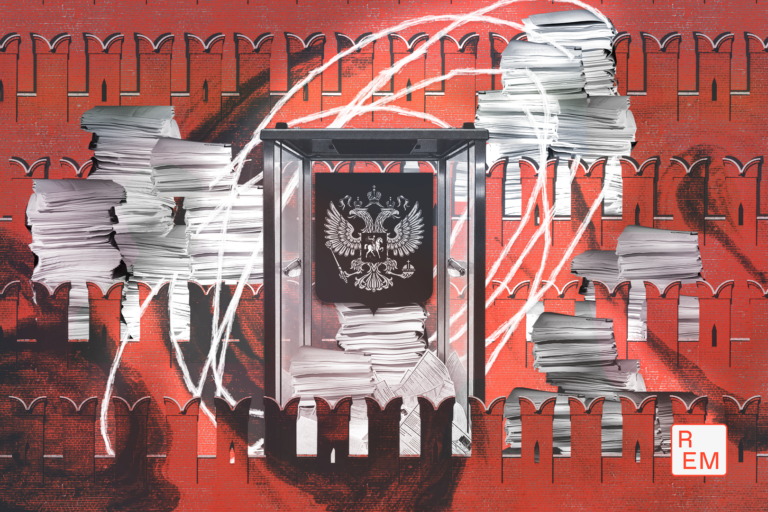
The Russian authorities have done everything to make the country's elections predictable and boring, and voters hardly ever go to them at all. And yet - should we expect something interesting from the September elections? Political scientist Alexander Kynev tells us about it in an interview with 7x7.
— Let's talk about the regional elections of 2024. What should we expect from them?
— The main trend of recent years in Russian political life has been “de-partisation”. Especially after the protests of 2011-2012 (the first wave of party lists reduction) and 2018 (the second wave of party lists reduction after the growing discontent over the pension reform), the authorities decided to weaken the opposition's ability to influence the elections as much as possible.
There was a massive and widespread reduction in the share of deputies elected by party lists. In the single-mandate districts the government had a success rate of 90% in these years, except for 2018-2019. So the number of deputy seats gained in single-mandate districts was increased, while the number of deputy seats based on party lists was decreased.
The fewer seats are distributed between the parties, the weaker the parties become. Thereby, the parties also become less attractive for sponsors. No seats in the regional parliament - no sponsors. This was a heavy blow to the parties, including the systemic opposition.
In addition, the special operation [the term Russian authorities use for the war in Ukraine - REM] hit the systemic opposition badly, because it led to the problem of identity, self-censorship and fear. It became unclear whether it was possible to oppose anything at all. What can be opposed, and what can't? What is the extent of actions permitted under the new circumstances?
As practice has shown, many parties have not been able to find answers to these questions; they were struck by a creative and strategic paralysis. The candidates nominated for the elections – and nothing happened afterwards. The whole presidential campaign was like that. We saw that the systemic opposition was so frightened that it did not fight at all.
But the parties were rewarded for their efforts of “playing give-away” during the presidential elections: for the first time in several years, we don’t see any further de-partisation this year. Those regions, where the share of deputy seats by party lists has already been reduced, have left things as they were; there is no further escalation, no further reduction in the share of deputy seats by party lists in favor of deputy seats gained in single-mandate districts.
It is true though, that party lists have remained mainly in the regions fully under control, where the authorities do not have to worry about anything at all. They even prefer the model with party lists in such regions. Because for the elections held in single-mandate districts it is necessary to choose a respected person from each district. The authorities, however, have no interest in such deputies, because they might think too much of themselves. While the party lists are verified in the administration, they are fully under control.
— Ok, let's go through the regions with elections scheduled for September then. Which regional election campaigns will be interesting to follow? Where is political struggle of some kind still possible?
— The general dynamics will be the most interesting thing to follow. How are people going to vote under these new conditions?
Of course, some elections to regional parliaments are going to be of interest. I would single out the Khabarovsk Krai, the Republic of Mari-El and the Republic of Altai because these regions have usually been competitive. I assume that an intrigue of some kind might remain there.
— What should one expect from the Moscow City Duma elections?
— I think that everything is going to be strongly regulated during this election campaign. Today (July 6th) was the last day to submit the collected signatures. After 10 days verification period, that is, after July 16th, we will find out who is allowed to participate. I think that in general only approved candidates will be allowed to campaign. However, in several districts, in four at most, some competition is possible, although it still will be competition between the candidates who have secured the necessary approval.
The key question is whether these elections prove the dynamics of the presidential elections true, i.e. the Communists weakening their position to the level of the other parties. Or will the Communists try to regain the position of the second most important party? This concerns not only the situation in the Moscow City Duma, but also in Russia as a whole.
— Is there anything to say about the governors?
— There will be more gubernatorial elections than 5 years ago. Because in May of this year some governors were invited to work in the presidential administration, so the position became vacant in several regions. However, in my opinion, there is nothing special to look at in terms of competition.
The only region with an outline of competition during the nomination phase was the Zabaykalsky Krai, where Grigoryev, a State Duma deputy from Just Russia, ran against Governor Osipov. We will know the nomination results in the coming days. But judging by public statements, Grigoryev won’t pass the notorious municipal filter.
There is an additional intrigue in the Republic of Altai: Turchak was appointed as acting governor there, and this region is a stranger to him. I think that not only local intrigues, but also Moscow intrigues may interfere with the election results here. I think that some of Turchak's former Moscow colleagues won’t be happy about his success. So there is some space for an intrigue.
— And what about the elections in regional capitals?
— Deputies for 21 city councils of regional capitals will be elected. Compared to the previous elections, the situation in most regions stays unchanged. There are changes only in three cities.
Vladikavkaz is one of them. Previously they have used a mixed system – 16 deputies were elected by party lists and 16 by single-mandate districts. This year all deputies will be elected by party lists only. This illustrates my previous words: Vladikavkaz is a fully controlled territory from electoral point of view, and it is easier to win there by party lists.
In Murmansk, the number of deputies was reduced from 30 to 25. They use a pure majority voting system.
And in Anadyr they voted in single-mandate districts only, there were no party lists. Now a mixed system has been introduced. But I don't think that the Chukotka Autonomous District is a region where the authorities might encounter any difficulties during the elections.
In all other cities holding elections this year, party lists were canceled before the last elections in 2019. These are Ulan-Ude, Yoshkar-Ola, Chita, Khabarovsk, Blagoveshchensk, Vologda, Irkutsk, Yuzhno-Sakhalinsk, and Birobidzhan.
There was an experiment in Chelyabinsk: the deputies of district councils were delegated to the City Duma. However, they stopped this experiment, and there will be direct elections of the City Duma this year: 25 deputies will be elected in single-mandate districts and only 12 by party lists.
It will be interesting to see the results in Irkutsk, because Irkutsk has always been a kind of litmus paper for the whole country. The Communists have always been very strong there, real opponents to the authorities. It will be interesting to see what happens to the Communists in the city which once has served as their stronghold.
— Let's get back to general trends. What is your opinion on the legislative innovations of this year. First of all, I mean the ban on foreign agents from participating in elections in almost any role?
— This ban seems to be an instinctive reaction of the authorities to the foreign agents' demarche when they announced their “Campaign for Moscow State Duma”. The authorities got a blow and responded straight away: “We won't even give those who have left a chance to be elected”.
At the same time, this means colossal damage for everyone else, because as a result, the authorities get the opportunity to deprive any person of his deputy status and remove him from the election at any time without any trial. They even don't have to invent anything anymore: they don't have to look for property objects [abroad], they don’t have to verify any signatures. They simply issue a sheet of paper signed by the Ministry of Justice stating that a certain person is a foreign agent. And that's it, that's the end of this person’s political career.
This scheme is already being actively used, at least in St. Petersburg and Moscow. It demoralizes, destroys the will to fight, destroys the motivation. Why should anyone try to get elected to a parliament if he can be removed from the campaign at any moment? There is no point in that. Therefore, it will be even harder to convince people to participate in the elections.
— What is your opinion on the remote electronic voting?
— I see it as an instrument for destroying the idea of elections in general. Because even those who have been saying for many years that it is necessary to participate in elections no matter what, will have no more arguments left under the circumstances. Electronic elections have nothing to do with elections at all. It becomes a process of drawing numbers in the air.
The worst thing is, the electronic elections lead to getting out of touch with reality. They completely destroy all feedback mechanisms. Until now, the elections at least had a function of a big opinion poll, which showed the attitude of voters to the authorities. But now the authorities are destroying this indicator allowing measuring at least something.
— So far, only Moscow has completely switched to remote electronic voting. Will the rest of the regions also follow?
— There is no such enthusiasm in the regions, because people are closer to the ground there and, it seems to me, better understand the importance of feedback. Therefore, my forecast is as follows: paper voting will rather prevail in general.